
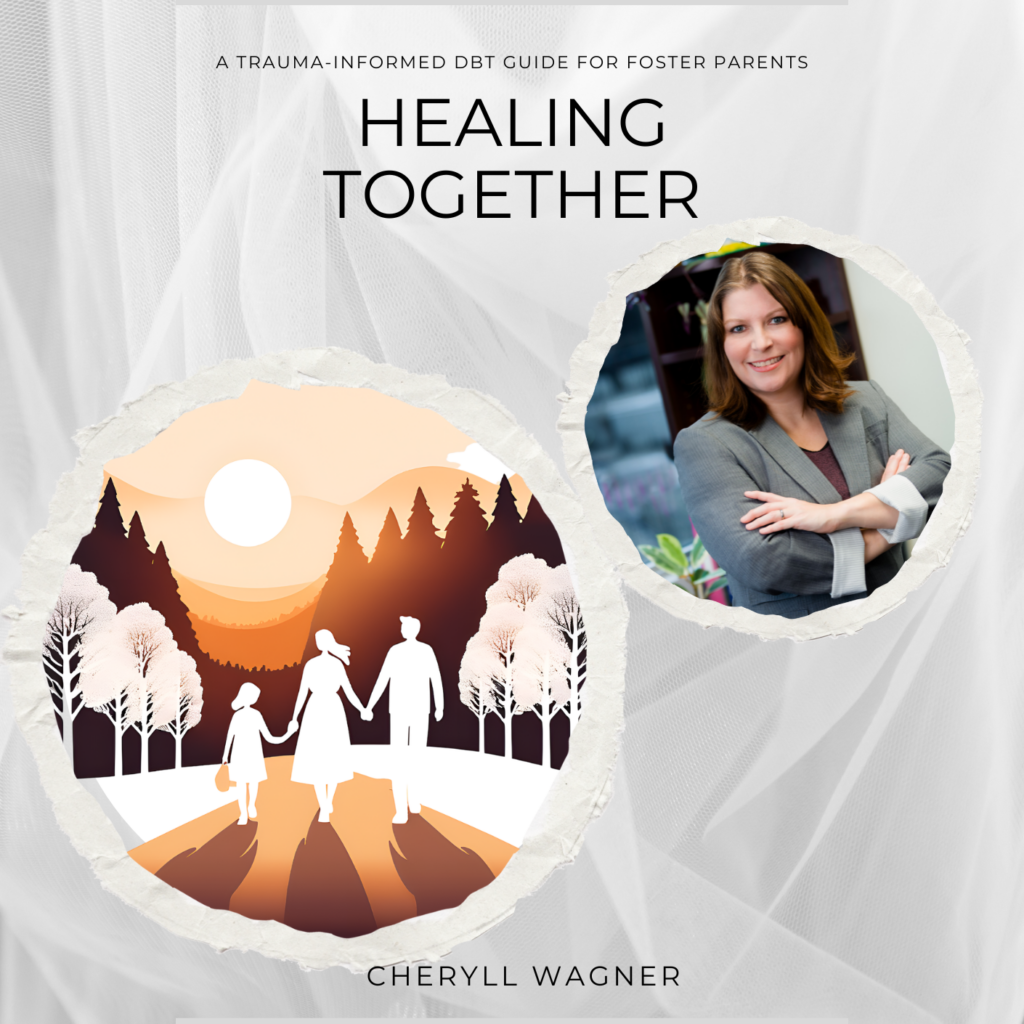
Podcast Summary: Deep Dive into “Healing Together”
This episode features an in-depth discussion of the book “Healing Together,” which explores how Dialectical Behavior Therapy (DBT) can help foster children heal from trauma. The hosts break down the book’s key concepts and practical applications through engaging dialogue and real-world examples.
Key Topics Covered:
Understanding Trauma’s Impact
- The hosts discuss how trauma rewires a child’s brain, using the book’s analogy of a house with furniture barricading doors and windows
- Explains how trauma keeps the brain in constant “alarm mode,” making it difficult for children to relax, focus, or connect
- Emphasizes that challenging behaviors are survival responses, not defiance
DBT Tools and Implementation
- Breaks down the four main DBT tools:
- Mindfulness
- Emotion regulation
- Distress tolerance
- Interpersonal effectiveness
- Explores practical applications through real-life examples, like using visual schedules for morning routines and helping children manage social situations
Age-Specific Approaches
- Discusses different strategies for:
- Young children (3-6): Using play, feeling puppets, and movement games
- School-age children (7-12): Implementing feeling journals and art projects
- Teenagers: Focusing on independence while maintaining support
Creating Safe Environments
- Emphasizes the importance of physical, emotional, and relational safety
- Discusses the creation of “safety plans” and crisis management strategies
- Highlights the importance of predictable routines and consistent responses
Caregiver Support and Self-Care
- Stresses the importance of “oxygen mask moments” for caregivers
- Discusses building support networks and preventing burnout
- Emphasizes that self-care isn’t selfish but essential
Notable Examples
The hosts share several compelling case studies from the book, including:
- Karen’s transformation of morning routines with Sophia
- Maya’s journey to managing social situations
- Various examples of implementing “active mindfulness” and emotion regulation techniques
Key Takeaways
- Healing isn’t linear – it’s a journey that requires patience and understanding
- Connection is fundamental to the healing process
- Traditional parenting approaches may need modification for children with trauma
- Every interaction matters in building trust and promoting healing
- Caregivers need support and self-care to effectively help others
The discussion concludes with an emphasis on hope, reminding listeners that healing is possible and that they’re not alone in this journey.